



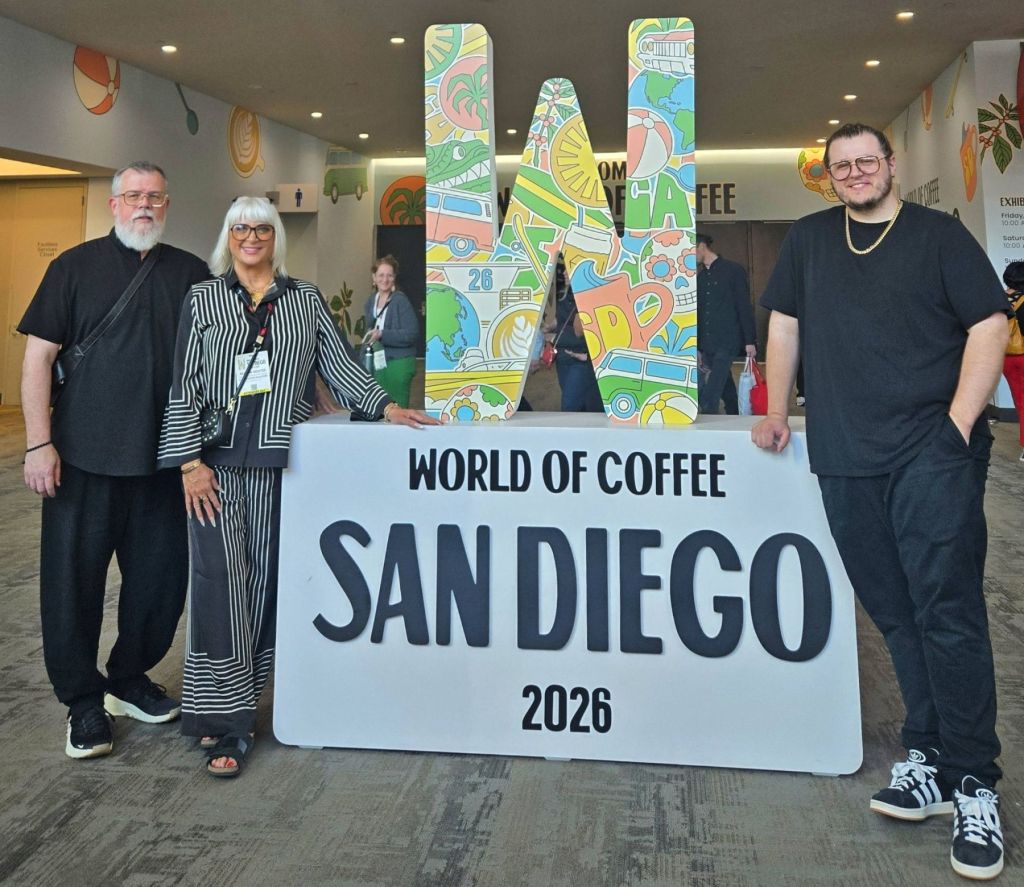
Charles, Alison, and Ethan Scates of FLUID Coffee at World of Coffee 2026
Can you tell our community a little about your company?
FLUID Coffee Roasters started as a small family project and has grown quite a bit since then, but it’s still very much rooted in that same family spirit. My wife Alison—who goes by Sun—and I started FLUID with the idea that coffee should be something people connect over, not just a product but a shared experience.
Over the years we’ve grown into a group of cafés across Northwest Indiana along with our roasting operation. Our kids and their partners are involved in different parts of the business, from design and operations to roasting and logistics, which has allowed the company to grow while still keeping its identity.
On the roasting side, our philosophy has always been to highlight the natural character of the coffee. We look for coffees with strong personality and roast them in a way that keeps them balanced, expressive, and approachable.
At the end of the day, FLUID is about people as much as it is about coffee. Farmers, staff, customers, and family all play a role in the story.
When did you first get into coffee and what do you remember about it?
Our current chapter with coffee started in 2015 when Sun and I decided we wanted to build something together. At the time we both had established careers, but we stepped away from everything and started fresh with FLUID.
What’s interesting is that coffee had actually been part of our story much earlier. Back in the early 1990s, before we had kids, we talked seriously about opening a coffeehouse. That was a very different era, long before specialty coffee had really taken off. We loved coffee, but the industry was still young and that dream never materialized at the time.
Years later when we came back to the idea, the coffee world had changed dramatically. The focus on origin, quality, and craft really resonated with us, and it felt like rediscovering something that had always been there.
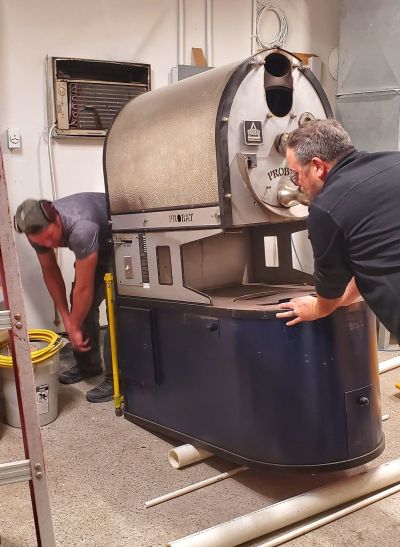
Installing the old Probat circa 2015
How did your company get started?
About 11 years ago Sun and I decided it was time to build something together. Our son was in college and our daughter was about to graduate high school, and we felt like it was the right moment to take the leap.
We sold everything we had and opened our first café. The early days were very hands-on. I came from the building materials industry and had a general contractor’s license, so I handled much of the buildout myself with help from friends in the trades. Sun brought her background in design and management and became the creative force behind FLUID—designing the cafés, building the menus, and developing the recipes.
Our kids quickly became part of it too. Our son came in on the very first day we opened to help because we were unexpectedly busy, and he’s been involved ever since.
Today we have seven cafés, a roasting operation, and a team of around 50 people, but it’s still very much a family-run company.
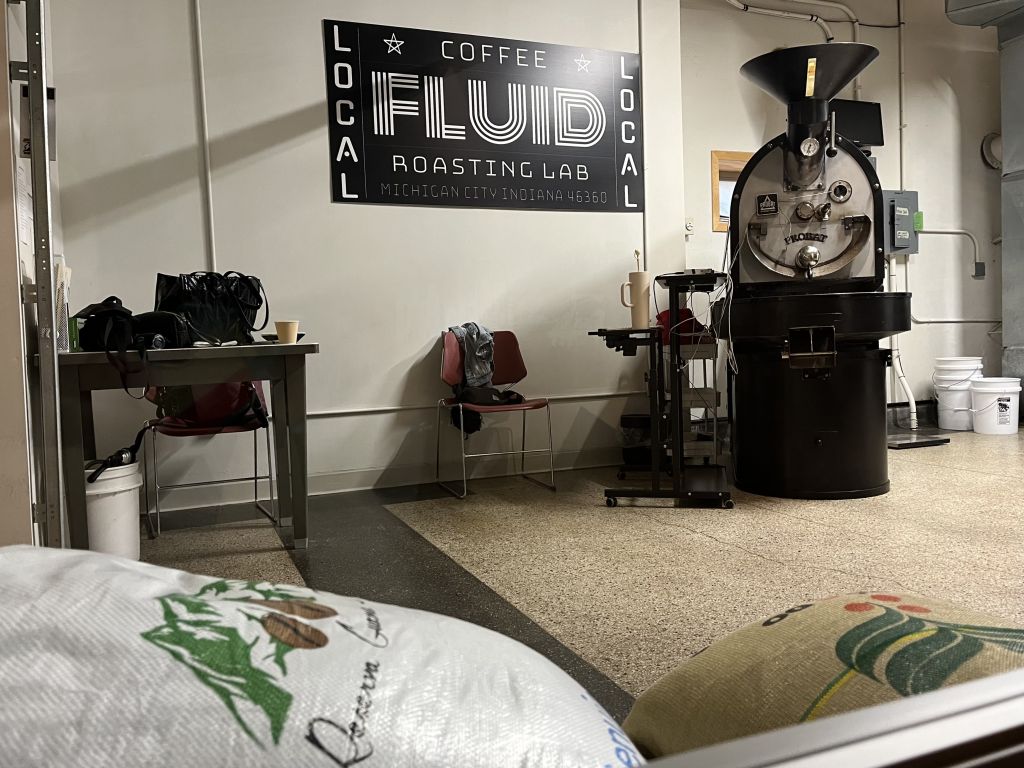
FLUID’s Probat L12 in their Michigan City Roastery location
What kind of roaster are you working on?
We currently roast on two machines. Our original roaster is a 1991 Probat L12, which is an absolute workhorse. We bought it from our friends at Tinker Coffee in Indianapolis when they upgraded their roaster. It served as the backbone of our roasting program for many years and still produces beautiful coffee. That machine really requires you to develop a feel for roasting—it’s very hands-on.
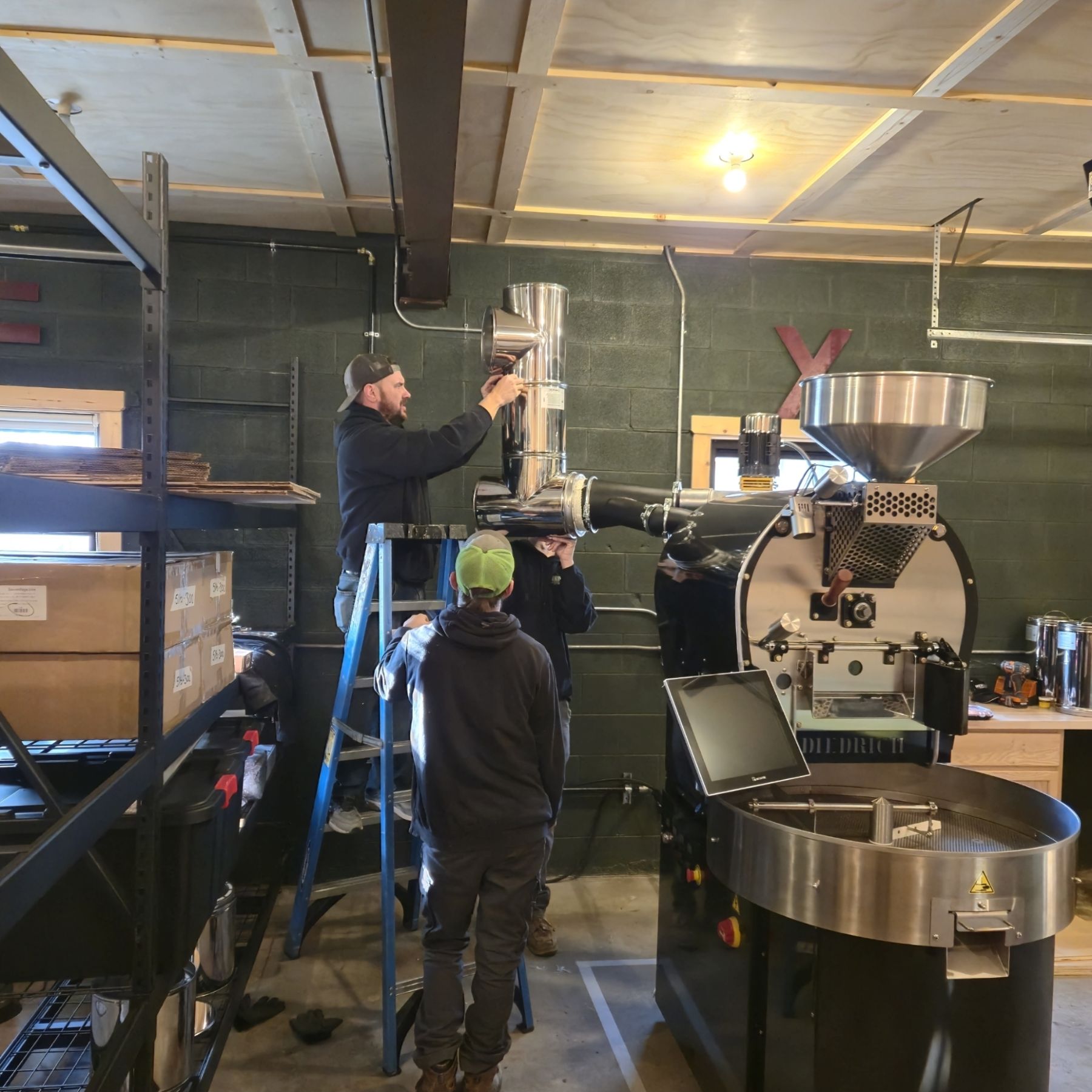
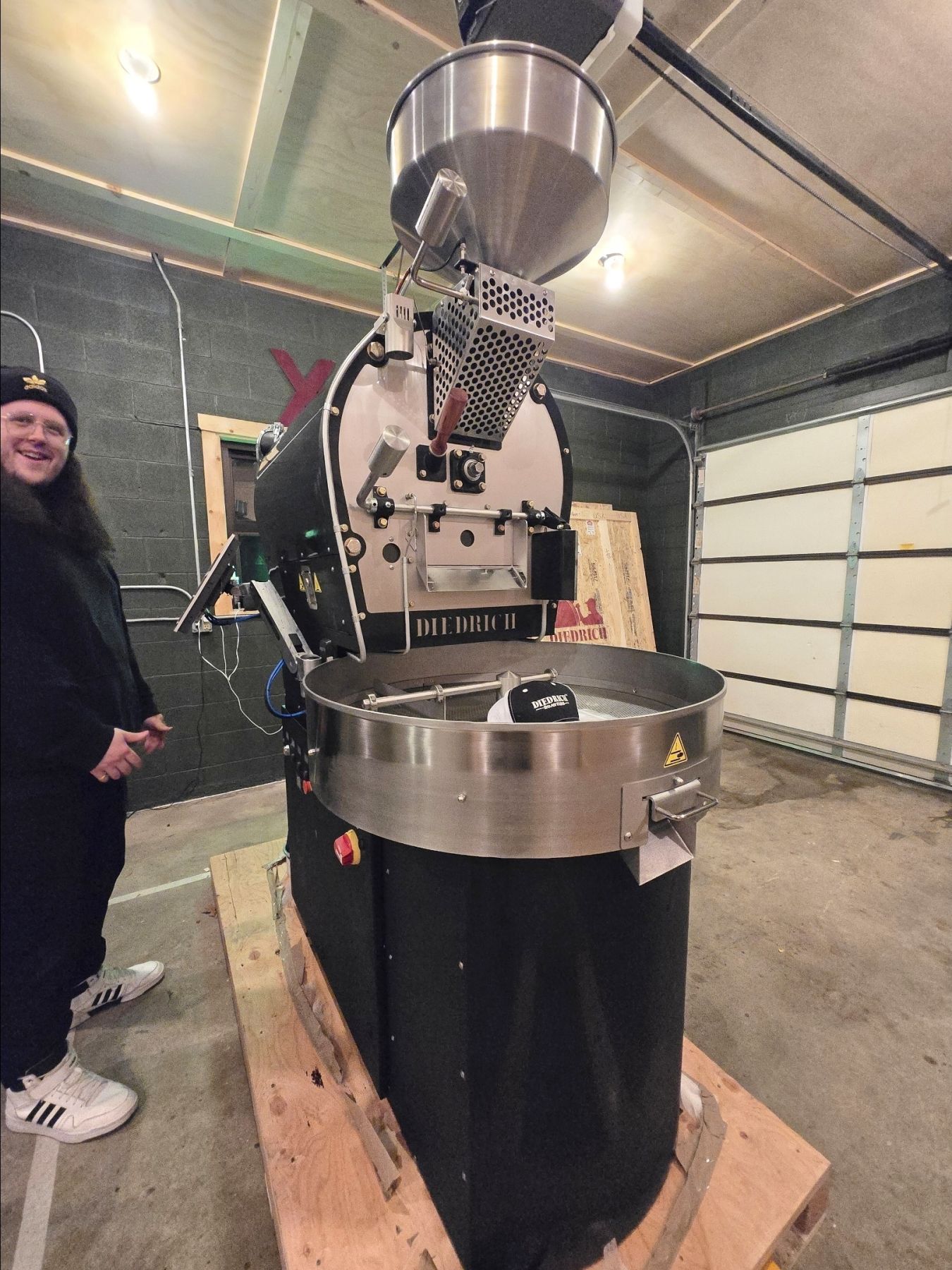
A couple of years ago we added a Diedrich DR12. It’s a much more modern machine and capable of fully automated roasting if needed. It’s also made it much easier to train new roasters while maintaining consistency.
The Probat taught us a lot about the craft, and the Diedrich gives us a great platform moving forward.
-
- Installing the Diedrich DR12 in 2026
-
- Ethan can’t hide excitement about the new roaster
Do you treat roasting as an art, a science, or a combination thereof?
It’s definitely both.
Roasting on the Probat often feels more like an art. You’re listening, watching, and responding to the coffee in real time. The Diedrich brings more precision and data into the process, which highlights the science side.
We enjoy that balance. We love studying how coffees develop and using tools like our sample roaster to build profiles, but at the same time our family has always been creative and design-oriented, so we naturally see roasting as a craft as well.
In a lot of ways, coffee roasting is just another form of creative expression.
Do you have any wild antithetical or “tinfoil hat” theories about roasting?
One thing we’ve learned is that roasting doesn’t always behave as predictably as people think. There are plenty of charts and rules that are helpful, but sometimes great coffee comes from trusting your senses more than the numbers.
Our old Probat really taught us that. You can have a profile written down, but you still find yourself making adjustments based on smell, sound, and how the beans are moving in the drum.
So maybe our slightly contrarian view is that data is a great tool, but it shouldn’t replace the roaster’s intuition.
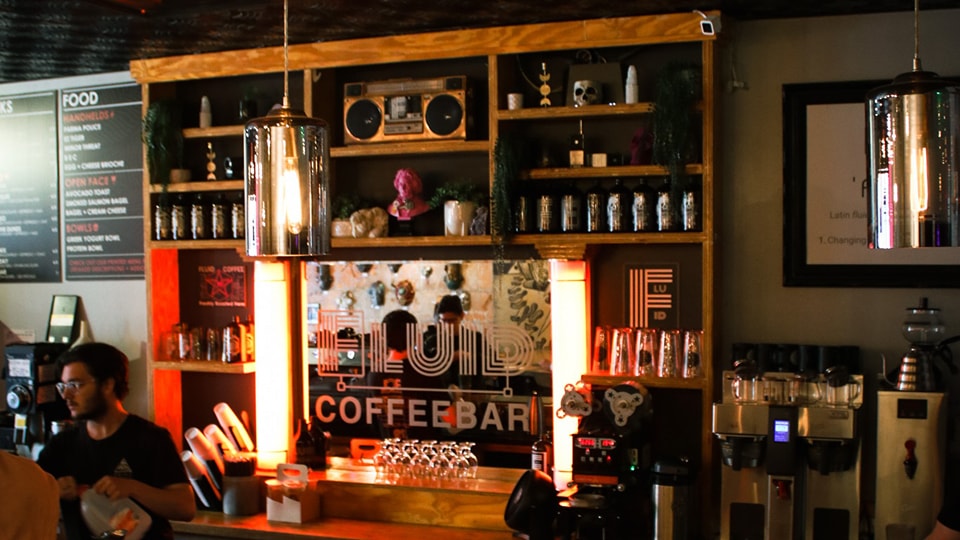
The coffee bar at FLUID’s Downtown Valparaiso location
Where do you see your roasting company heading in the next five years?
We expect our roasting program to continue growing, especially on the wholesale side. We already supply coffee to several cafés and restaurants in our area, and we see that part of the business expanding.
We may add another café or two, but that’s still up in the air. More than anything, the next few years are about continuing to refine our craft—improving our roasting, strengthening our sourcing relationships, and making the coffee better.
Growth matters, but doing the work well matters more.
Any advice for people thinking about getting into the coffee business?
After more than a decade in the industry and several café buildouts, one thing we’ve learned is that the old saying “location, location, location” is still very true. Unless you’re building something designed to be a destination, choosing the right location is critical.
If you’re planning to roast, do your homework on local regulations. Zoning, ventilation, and afterburner requirements can affect where you’re allowed to operate. Even if you’re only opening a roastery, you may still need to pass health inspections.
And if you’re opening a café, spend real time planning the bar layout. When things get busy, the way your bar flows can make or break service.
Passion for coffee is important, but the details on the business side matter just as much.
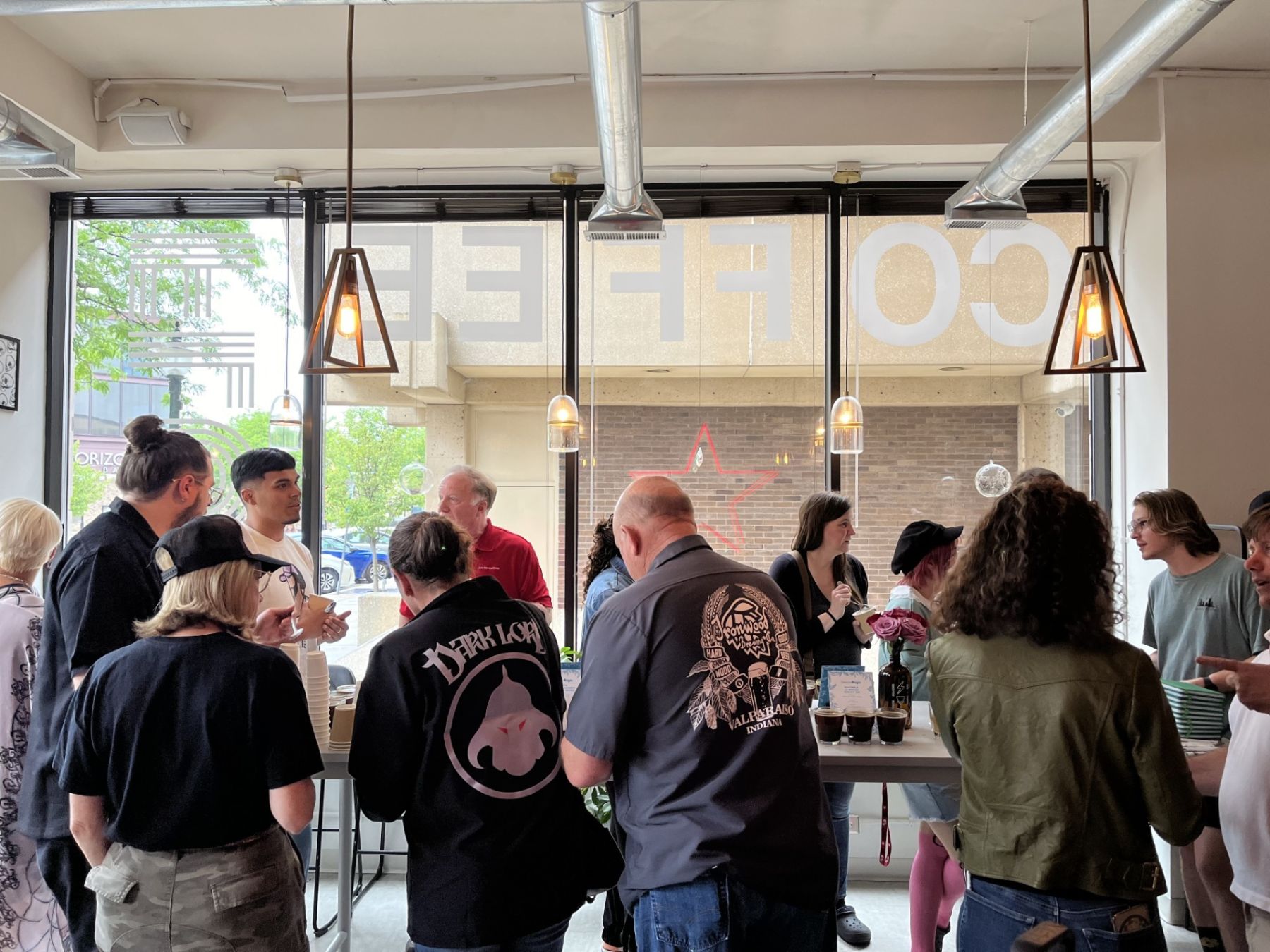
A community cupping at FLUID’s Michigan City Location with Genuine Origin
Where do you think coffee is headed in the next five years?
We’re clearly seeing growth in fast drive-through coffee concepts, and that trend will likely continue.
At the same time, I think the opposite is growing as well. As more people work remotely, cafés are becoming important “third spaces” where people gather, work, and connect. With technology and AI becoming more present in daily life, human interaction and community spaces may actually become even more valuable.
I also think people’s awareness of coffee quality continues to grow. More customers are learning to appreciate origin, roast profiles, and flavor. In that way, specialty coffee will probably continue expanding alongside the faster convenience models.
For you, what is one absolute do and one absolute do not in coffee?
An absolute do is to start with quality coffee and roast it thoughtfully for the specific origin and varietal. Great coffees have subtle characteristics that deserve to be highlighted, not buried.
An absolute do not is trying to compete by lowering quality. Turning coffee into a fast-food product just isn’t why we got into this industry.
For us, coffee should always be about craftsmanship and respect for the work that happens from farm to cup.
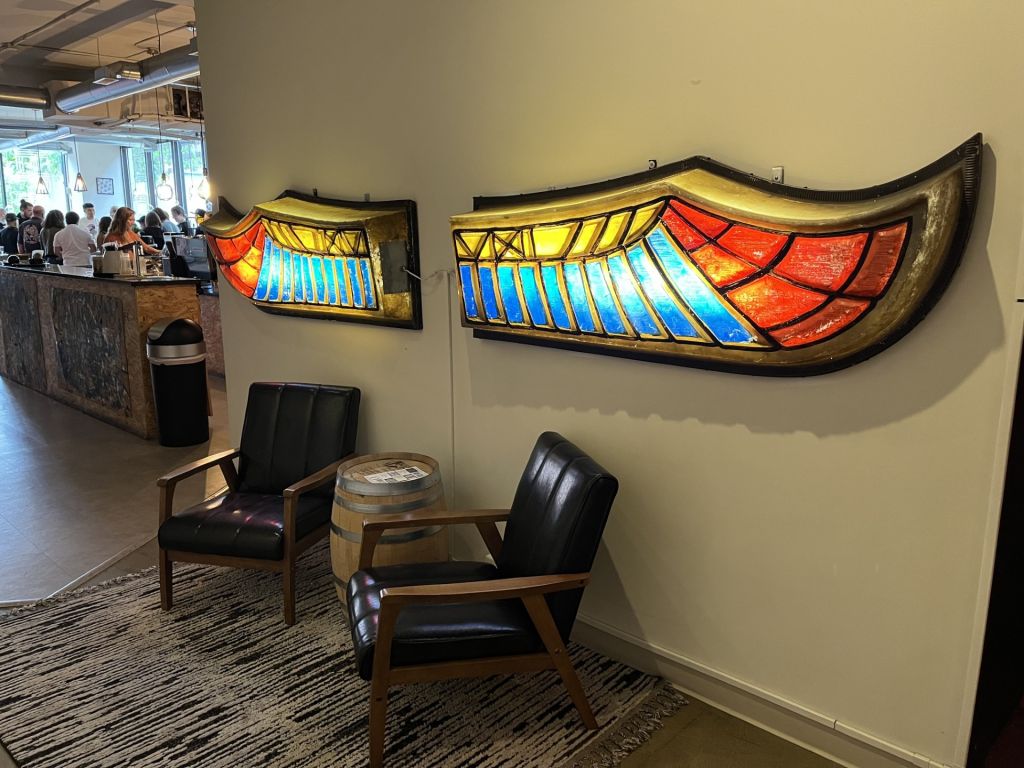
FLUID finds a lot of their decor via thrifting and restoration
What is the best coffee you’ve tasted in recent memory?
I travel quite a bit and visit a lot of coffee shops around the country, so I get to taste some great coffees.
Recently I was at the World of Coffee event in San Diego and tried some excellent coffees from roasters across the industry. One that really stands out in recent memory, though, is the Finca Milan Colombian Nitro Fermentation coffee we served at the Genuine Origin booth during the expo.
It’s a very expressive coffee with a lot of complexity, and we were really proud of how it roasted. The quality of the green coffee was exceptional and it responded beautifully to the profile we developed.
It’s the kind of coffee that reminds you why this work is so rewarding.